Does Baking Soda Go Bad? Test It, Then Bake Biscuits
Jump to RecipeBaking soda doesn't spoil like milk, but it can lose its lift. Run the 1 tablespoon vinegar fizz test, see what Kansas State says about shelf life, then bake buttermilk drop biscuits.
 Save
Jump to:
A box of baking soda has no smell to warn you and no mold to spot. It looks the same whether it's fresh or worn out. So the only real way to know is to make it fizz.
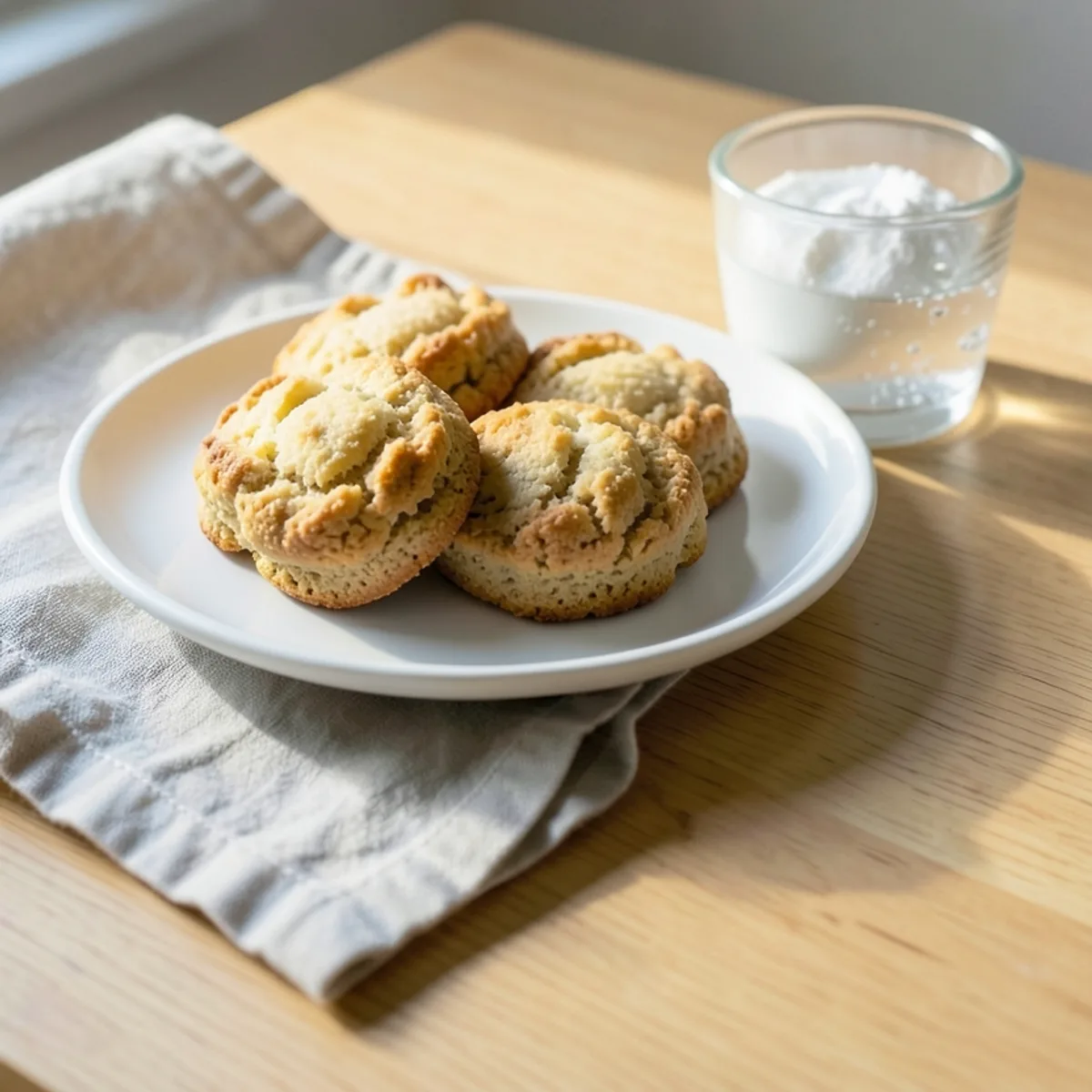
That's what this page does. You'll test the box first, then use it straight away in buttermilk drop biscuits, so a weak batch can't ruin dinner. The biscuit method is adapted from America's Test Kitchen's drop biscuits, as published by WNYC. The wording and the layout are ours.
- The test comes first, so you know the leavener works before the butter melts.
- Drop biscuits are scooped, not rolled or cut, and the card gives grams for the flour and butter.
- Prep is about 10 minutes (our estimate), the bake is 12 to 14 minutes, and the cool is 5.
Does baking soda expire?
Not in the way milk does. A weak box is a quality problem, not a spoilage problem. The baking soda simply makes less gas than the recipe counts on.
The one university figure found for this page comes from Kansas State University Extension's cupboard storage chart. It lists baking soda at 2 years at 70 F, with the comment "keep dry and covered." The same chart lists baking powder at 18 months, or the expiration date on the can. Kansas State's figure is a quality guideline, not a spoilage deadline.
Here's the honest limit. No official figure for an opened box was found, and the other durations that circulate online for opened or unopened boxes are not sourced here. Trust the fizz test, not the printed date.
What happens if you use expired baking soda?
Many cooks report that weak baking soda shows up as baked goods that stay flat, dense or dry, not as anything unsafe or unpleasant to eat. That comes from two editorial sources, not a controlled trial. The fizz test is the quick way to confirm the problem before you blame the recipe.
How to test baking soda with vinegar
King Arthur's freshness test uses two pantry items and one glass.
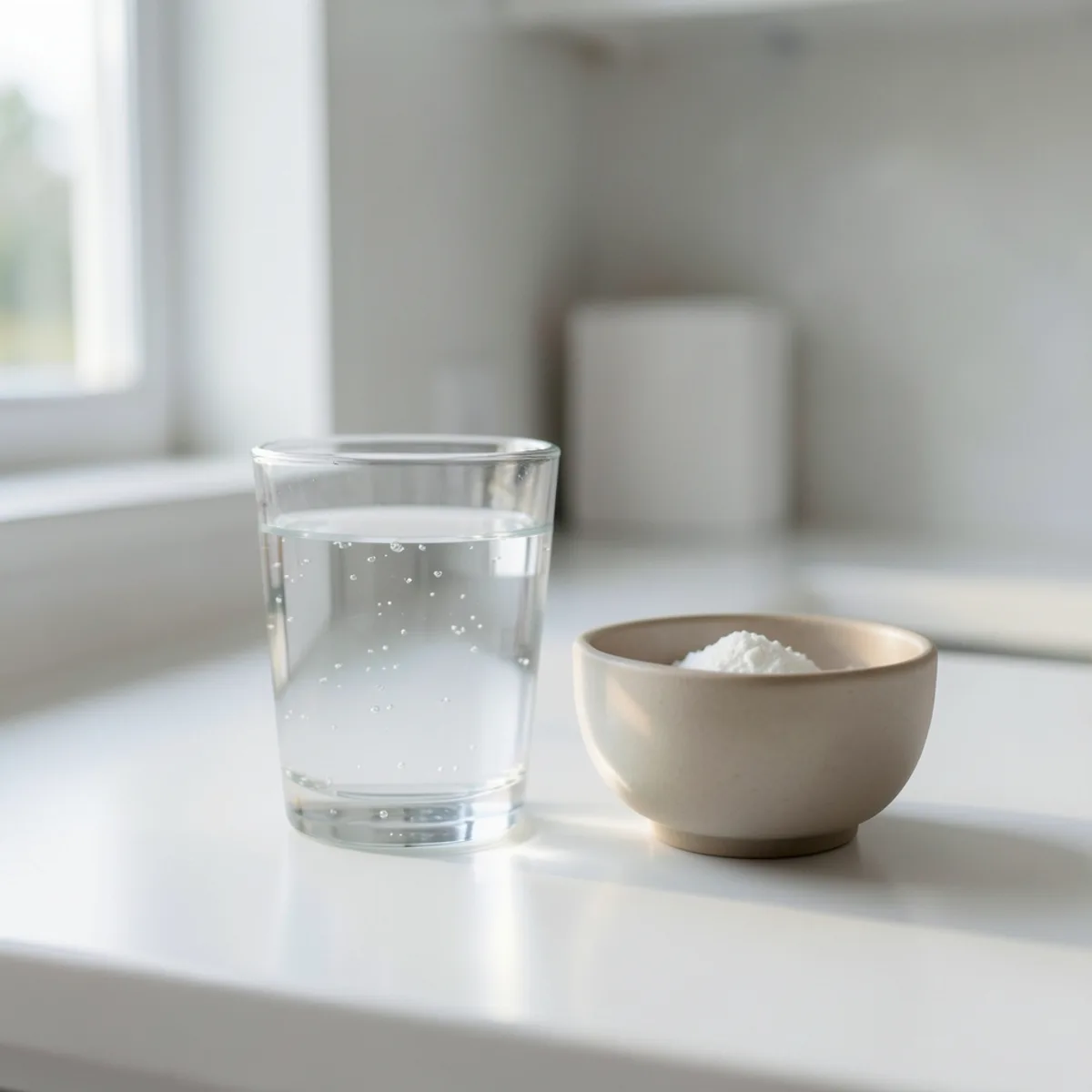
- Pour 1 tablespoon of vinegar (about 15 ml) into a small glass.
- Stir in 1/2 teaspoon of baking soda (about 2.5 ml).
- Watch. It should fizz right away and vigorously.
Gentle or minimal fizzing means replace the box. Throw the test sample away, and measure the soda for the dough separately.
The recipe also uses baking powder, so check that too. King Arthur's test for powder is 1/2 teaspoon in 2 tablespoons of warm water (about 30 ml). It should bubble and foam.
The Food Science / Lab Kitchen Note
Except where a source is named, this section is standard food chemistry.
Here's why this works. Baking soda is sodium bicarbonate, NaHCO₃, a base. When it meets an acid, it releases carbon dioxide (CO₂), and that gas is what lifts the dough. In the fizz test the vinegar is the acid. In the biscuits, the buttermilk is.
A weak box has less bicarbonate left to react, so it makes less gas. That fits what cooks report: a biscuit with too little lift stays flat and dense.
Why does a box weaken at all? Moisture and odors from the place it's kept are the likely suspects, which is why Kansas State says to keep it dry and covered. That is a general explanation: no source opened for this page names a cause or gives a rate, so there's no number here.
One piece of our math: 1 tablespoon is 3 teaspoons, so the test uses 6 times as much vinegar as soda by volume. That's our reading of King Arthur's amounts, and it suggests the fizz you see reflects the soda, not a shortage of acid.
The biscuit recipe leans on two leaveners. The buttermilk reacts with the baking soda, and the baking powder brings its own acid. That's why both get checked.
Fresh, weak and baking powder compared
The table below compares published data, not finished bakes. Where no source gives a figure, the cell says so.
| Variant | Fizz check (as published) | Shelf life guideline | In a bake | Swap note |
|---|---|---|---|---|
| Fresh baking soda | 1/2 teaspoon in 1 tablespoon vinegar fizzes right away and vigorously (King Arthur) | 2 years at 70 F, keep dry and covered (Kansas State Extension); a quality guideline | No sourced data on rise or height | Not applicable |
| Weak baking soda | Gentle or minimal fizzing means replace it (King Arthur) | No official opened-box figure found | Flat, dense or dry baked goods (many cooks report; two editorial sources) | No sourced data |
| Baking powder | 1/2 teaspoon in 2 tablespoons warm water should bubble and foam (King Arthur) | 18 months or the expiration date on the can (Kansas State Extension) | No sourced data on a direct swap | The ratio appears on one site only, so it isn't stated here |
Buttermilk drop biscuits
The recipe card above has the full list and steps. These are the points that matter most.
The dough is mixed just until combined, so stop stirring once no dry flour shows. The buttermilk and 8 tablespoons of melted butter are stirred together first, until small clumps form. The scoops are level 1/4-cup portions, set 1 1/2 inches apart on a parchment-lined sheet. And the oven is very hot, 475 F (246 C), on the middle rack.
Use food-grade, aluminum-free baking soda and baking powder, and measure the spoons level. On sodium, our estimate is about 308 mg per biscuit. The salt, baking powder and baking soda together carry most of it.
Common mistakes
Blaming the recipe first. If biscuits come out flat and dense, the soda may be the cause. Run the fizz test before you change anything else.
Reusing the fridge box. A box that has sat in the fridge soaking up odors is a deodorizer now. Buy a fresh box for baking.
Overmixing, or a cool oven. Drop biscuit dough should be mixed just until combined and baked in a very hot oven. Overmixing or a cooler oven may also work against the bake, even with a fresh box.
If your baking soda fails the test
| Original | Replacement | Proportion | What changes |
|---|---|---|---|
| Weak baking soda | A fresh box of baking soda | Same amount as the recipe | The only fix the sources support. The fizz test confirms the new box. |
| Baking soda | Baking powder | No sourced data on this page (one site only) | See baking soda replacement for the swaps that are sourced. |
| Buttermilk | Another liquid | No sourced data | Not covered by the sources opened for this page. The recipe depends on buttermilk's acid. |
Storing the box, and the biscuits
Keep the baking box dry and covered, as Kansas State's chart says, and keep it separate from the fridge box. That's the whole storage plan the sources support.
For the finished biscuits, no fridge or freezer time is sourced, so this page gives none. To refresh day-old biscuits, the source recipe warms them in a 300 F (149 C) oven for 10 minutes.
Where the numbers come from
The shelf life figures come from Kansas State University Extension's "Safe Food Storage: The Cupboard" chart (MF3131), a university extension publication. It is a storage reference, not a study, so it has no sample size. It calls its figures quality guidelines. The fizz test amounts come from King Arthur Baking, a specialist baking site (blog post, 2015), which is a tips post and not a trial. The fridge box advice comes from Arm and Hammer, the maker of the product, and is a manufacturer's page.
The weak-soda observations come from two editorial food sites, so they describe what cooks report and are not measured results. The biscuit quantities and method come from America's Test Kitchen's published recipe, read through the WNYC page. The nutrition is our own estimate from typical USDA FoodData Central values and has not been measured. We found no controlled comparison of weak and fresh baking soda in a real dough.
Servings: 12 biscuits
Does Baking Soda Go Bad? Test It, Then Bake Biscuits
Baking soda doesn't spoil like milk, but it can lose its lift. Run the 1 tablespoon vinegar fizz test, see what Kansas State says about shelf life, then bake buttermilk drop biscuits.
Ingredients
Step 1: the fizz test (this sample is discarded)
Buttermilk drop biscuits
Equipment
- Small glass or bowl (for the fizz test)
- Rimmed baking sheet (lined with parchment)
- 1/4-cup measure (for the level portions)
- Wire rack (for the 5-minute cool)
- Kitchen scale (the gram weights above come from the source recipe)
Instructions
Step 1: test the baking soda
- Run the vinegar fizz test. Pour 1 tablespoon of vinegar into a small glass and stir in 1/2 teaspoon of baking soda. It should fizz right away and vigorously. Gentle or minimal fizzing means replace the box before you bake.
Bake the biscuits
- Heat the oven. Heat the oven to 475 F (246 C) with a rack in the middle. Line a rimmed baking sheet with parchment.
- Whisk the dry ingredients. Whisk the flour, baking powder, sugar, salt and baking soda in a large bowl so the leaveners are spread evenly through the flour.
- Mix the buttermilk and butter. Stir the chilled buttermilk and the 8 tablespoons of melted butter together until small clumps form.
- Combine just until mixed. Stir the buttermilk mixture into the dry ingredients just until combined. Stop as soon as no dry flour shows.
- Scoop the biscuits. Drop level 1/4-cup portions of dough onto the sheet, 1 1/2 inches apart.
- Bake until golden. Bake for 12 to 14 minutes, until the biscuits are golden and crisp.
- Brush and cool. Brush the tops with the remaining 2 tablespoons of melted butter, then cool the biscuits for 5 minutes on a rack.
Notes
Credit: the biscuit method and quantities are adapted from America's Test Kitchen drop biscuits, as published by WNYC. The wording is ours.
The fizz test amounts (1 tablespoon vinegar, 1/2 teaspoon baking soda) come from King Arthur. The ml figures for spoons are standard conversions (1 tablespoon about 15 ml, 2 tablespoons about 30 ml, 1 teaspoon about 5 ml), not measured.
Times: the 12 to 14 minute bake and the 5-minute cool are the source recipe's. The 10-minute prep time is our estimate and includes the fizz test.
Yield: the source recipe makes 12 biscuits. The nutrition below is for one biscuit.
Nutrition values are estimates calculated from typical USDA FoodData Central values, with all-purpose flour, unsalted butter, lowfat cultured buttermilk, table salt and sodium aluminum sulfate baking powder. The spoon weights used are typical reference values, not from the source recipe.
Reheating: to refresh day-old biscuits, warm them in a 300 F (149 C) oven for 10 minutes, per the source recipe.
Nutrition Facts
Per one biscuit (1 of 12) (estimated)
- Total Fat
- 10 g
- Saturated Fat
- 6.2 g
- Sodium
- 308 mg
- Total Carbohydrate
- 19.6 g
- Dietary Fiber
- 0.6 g
- Sugars
- 1.4 g
- Protein
- 3.2 g
Frequently asked questions
When should I replace my box of baking soda?
Replace it when the vinegar fizz test shows gentle or minimal fizzing, because King Arthur says that means it is time for a new box. Kansas State University Extension lists 2 years at 70 F for a cupboard box kept dry and covered, but that is a quality guideline, not a spoilage deadline.
Can old baking soda taste soapy or metallic?
Sources conflict on this, so this page doesn't blame old soda for a soapy or metallic taste. Many cooks report that weak soda shows up as flat, dense or dry baked goods instead.
Can I use the baking soda from my fridge for baking?
Sources advise buying a fresh box for baking instead of reusing the fridge one. Arm and Hammer says to change a fridge box about every 30 days and to use fresh baking soda for cooking, because fridge use is not the same as cooking use.
Can I use baking powder instead of old baking soda?
A swap ratio appears on only one site, so this page doesn't state it. Check the powder with King Arthur's warm-water test first, and see the baking soda replacement article for the sourced swaps.

Stella Nordi bakes in Portland, Oregon. She weighs everything in grams and explains why a bake fails. She covers SodaRecipe’s quick breads, biscuits and baking guides.
Comments