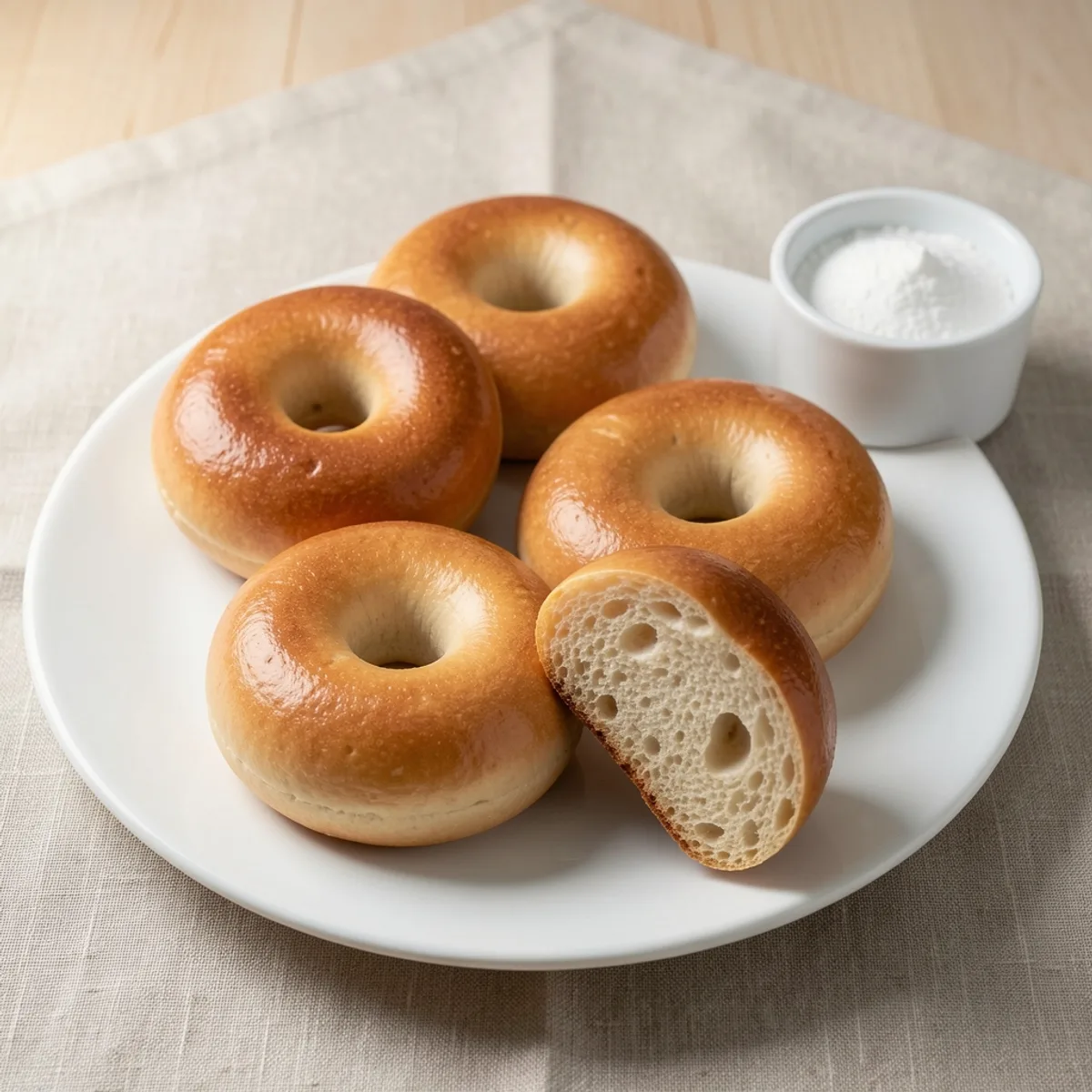
Yield: 8 bagels
Sodium in 1 Tbsp Baking Soda: 3,780 mg (Bagel Bath Math)
One level tablespoon of baking soda holds about 3,780 mg of sodium. Here is that against the 2,300 mg limit, why a tablespoon is not a dose, and a bagel recipe with a 1 tbsp boil bath.
Ingredients
Bagel dough
- 1 cup warm water, 237 mL
- 2 tsp active dry yeast, 8 g
- 2 tsp granulated sugar, 8.4 g; USDA 4.2 g per tsp
- 2 1/2 cups all-purpose flour, 312 g; spoon in and level
- 1 tbsp packed brown sugar, 13.8 g; 3 x USDA 4.6 g per packed tsp
- 1 tsp table salt, 6 g; level spoon
Baking soda boil bath
- 1 tbsp baking soda, 13.8 g; level spoon; food-grade, aluminum-free sodium bicarbonate, not baking powder
- 2 quarts water, 1.9 L
Egg white wash
- 1 large egg white, 33 g; only part is used
Instructions
Dough
- Foam the yeast. Stir 2 tsp (8 g) yeast and 2 tsp (8.4 g) sugar into 1 cup (237 mL) warm water at 110°F (43°C) and leave it about 10 minutes, until foamy.
- Mix the dough. Add 2 1/2 cups (312 g) flour, 1 tbsp (13.8 g) packed brown sugar and 1 tsp (6 g) salt, then knead into a dough. No sourced kneading time, so judge by feel.
- Let it rise. Cover the dough and let it rise about 1 hour, or until doubled.
- Shape 8 bagels. Divide the dough into 8 equal pieces, weighing them if you can, and shape each into a ring. Equal pieces keep the per-bagel figures honest.
Bath and bake
- Heat the oven. Heat the oven to 450°F (230°C) before the bagels go in the bath.
- Make the bath. Bring 2 quarts (1.9 L) of water to a boil and stir in 1 level tbsp (13.8 g) baking soda. Use a tablespoon, not a teaspoon, and use baking soda, not baking powder.
- Boil each bagel. Boil each bagel for 1 minute, flipping it halfway through, then lift it out with the slotted spoon. With 8 bagels that is 8 minutes of boiling if you go one at a time.
- Brush with egg white and rest. Set the bagels on a baking sheet, brush them with the egg white and let them rest 10 minutes before baking.
- Bake. Bake at 450°F (230°C) for 10 to 15 minutes, until the crust is deep golden.
- Pour the bath away. Pour the bath down the drain once the bagels are out. It is a cooking liquid, not a drink.
Notes
Adapted from the reference recipe at J. Cooks. We reworded it and recalculated the sodium from USDA household weights. This page is a data check, not a test kitchen: nothing here was cooked, tasted or measured by us.
Times: the card shows the J. Cooks times of 30 minutes prep and 15 minutes cook. The 80 minutes of resting is our sum of the rests in that recipe: about 10 minutes for the yeast, about 1 hour for the dough and 10 minutes for the shaped bagels. The 1 minute boil per bagel is in the steps and is not added to the card times.
Dough sodium by ingredient, from USDA lines: salt 2,328 mg, egg white up to 55, flour 6.3, active dry yeast 4.1, brown sugar 3.9 (13.8 g at 28 mg per 100 g), granulated sugar 0.1. That is about 2,397 mg per batch, or about 300 mg per bagel.
The bath adds a CEILING, not a measurement. The bath holds 1 tbsp (13.8 g) of baking soda, about 3,776 mg of sodium, and 3,776 divided by 8 is about 472 mg per bagel. Most of the bath goes down the drain, and we found no source that measures how much sticks to a bagel.
Sodium on the card is the dough (about 300 mg) plus that full ceiling (about 472 mg), so at most about 772 mg per bagel, or about 34% of 2,300 mg. The real figure sits somewhere between 300 and 772 mg.
Nutrition is per bagel (1 of 8) and is a rough estimate. The sodium comes from the USDA lines in the brief. Calories, carbs, protein, fat, sugar and fiber come from typical USDA FoodData Central values that are not in the brief, so treat them as approximate. The bath adds no calories to the card. Saturated fat is left off. Plain bagels, no topping.
Nutrition Information: Serving size: 1 bagel (1 of 8); sodium is a ceiling including the full bath (estimated)
Calories: 158Total Fat: 0.5gSodium: 772mgCarbohydrates: 33gFiber: 1.3gSugar: 2.9gProtein: 4.9g
Cuisine: American / Category: Does It Work
https://www.sodarecipe.com/how-much-sodium-in-1-tablespoon-of-baking-soda